Business premises and their labelling under Section 17 of the Trade Licensing Act
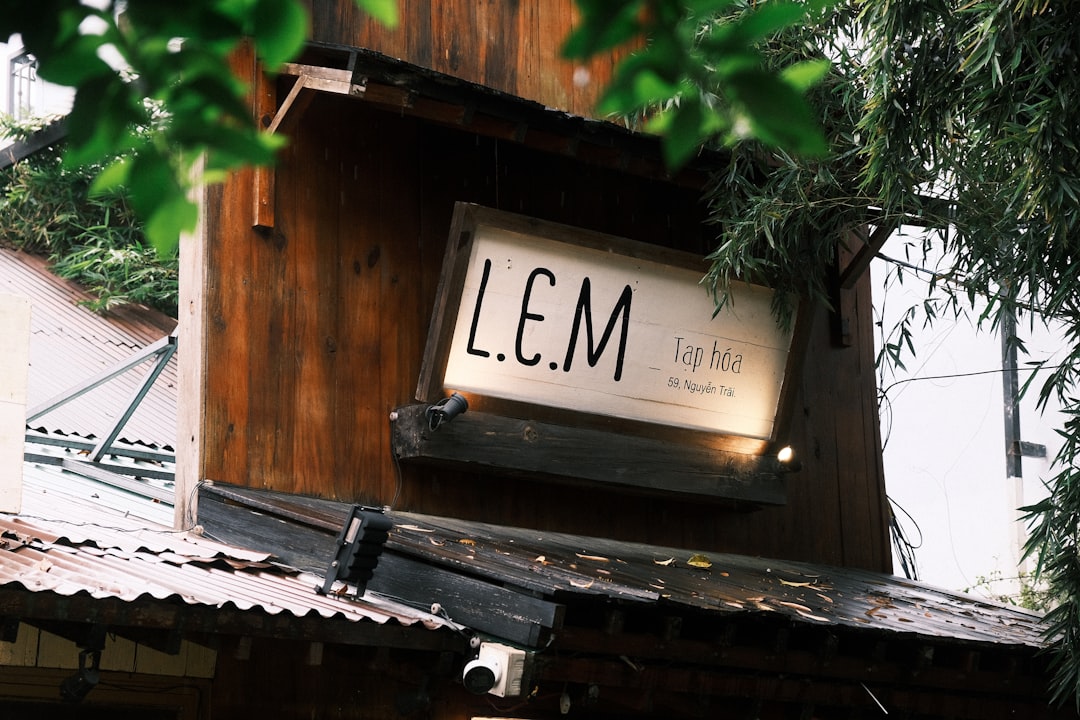
Business premises are the place where you actually do business: a shop, an office, a workshop, a restaurant, or perhaps a hairdressing salon. The Trade Licensing Act (Act No. 455/1991 Coll.) devotes a separate Section 17 to them, which determines what business premises are, how you must label them, what information you report to the Trade Licensing Office, and who is responsible for their operation. In this article we will explain business premises to you clearly and show you what to watch out for in practice.
What the Act says
Definition (Section 17(1)). The Act is brief: "For the purposes of this Act, business premises mean a space in which a trade is carried on." A vending machine (a device used for the sale of goods or the provision of services) and so-called mobile premises are also expressly considered business premises. Under Section 17(2), the latter are movable premises that "are not located in a single place for a period longer than three months" (for example a stall or a mobile shop).
Multiple premises and the legal grounds for use (Section 17(3)). You may do business on several premises at the same time, but you must have legal grounds for using each of them (ownership, lease, etc.). A trade may be carried on in a flat that is not in your ownership only with the owner's consent. A key obligation: the commencement and termination of the carrying on of a trade on the premises must be notified to the Trade Licensing Office in advance.
Suitability and the responsible person (Section 17(4)). The premises must be suitable for carrying on the trade under special regulations (hygiene, building, fire). For each premises, a person responsible for its activity must be designated – this does not apply to vending machines.
Information in the notification and the premises identification number (Section 17(5) and (6)). In the notification you state the business name or name, the identification number, the address of the premises, the subject of business and the date of commencement (or termination) of the activity. The Trade Licensing Office then assigns the premises an identification number of the premises and registers it in the Trade Register.
Mandatory labelling (Section 17(7) and (8)). The premises must be "permanently and visibly labelled from the outside with the business name or designation or with the first name and surname of the entrepreneur and their personal identification number" (IČO). Premises intended for the sale of goods or the provision of services to consumers must additionally be labelled with the first name and surname of the person responsible for the activity of the premises, with the sales or business hours designated for dealings with consumers and, in the case of accommodation facilities, also with their category and class.
Commentary and explanation
The purpose of Section 17 is to ensure that every place of business is traceable and transparent – both for customers and for supervisory authorities. The labelling of the premises therefore serves two roles: it identifies the entrepreneur (through the IČO you can find them in the register) and, in the case of shops and services, it also protects the consumer, who immediately sees who is responsible for the operation and when it is open.
Watch out for the difference between the registered office and the business premises. The registered office is the formal address of the company or the self-employed person; the business premises are the actual place where the trade is carried out. If you do business exclusively at the registered office (typically a range of online or advisory activities) and have no separate operation, you do not need to establish or report business premises. However, as soon as you open a shop or a workshop, a duty to notify and to label arises for you under Section 17.
The notification is "in advance". The Act requires the commencement and termination of operations to be reported before it takes place. Carrying on business on unreported premises is a breach of the Trade Licensing Act and a fine may be imposed for it. Likewise, do not forget the responsible person – for a single small shop this is usually the entrepreneur themselves, for multiple premises typically a manager. In the case of a temporary closure of premises intended for consumers, the entrepreneur is obliged, unless serious reasons prevent it, to indicate the start and end of the closure in advance in a suitable place visible from the outside (Section 17(9)); the Act does not set any specific time limit in days here.
Practical impacts and examples
Example 1 – hairdressing salon. You are opening a salon in a leased space. Before commencement, you notify the premises to the Trade Licensing Office and, at its request, provide the lease agreement. At the entrance you place permanent labelling: the name/business name, the IČO, the first name and surname of the responsible person and the opening hours. Without this information you risk a fine during an inspection.
Example 2 – e-shop from the registered office. You dispatch goods from the registered office and have no brick-and-mortar shop. You do not establish separate business premises. If you later lease a warehouse with a collection point for customers, it becomes business premises with all the obligations of Section 17.
Example 3 – a stall at markets. A mobile stall is mobile premises. You label it with the business name/name and the IČO; you do not have to prove to the Trade Licensing Office the legal grounds for use or the location in the case of mobile premises. The Act does not require sales hours to be indicated for mobile premises and vending machines.
Example 4 – termination of activity. You are closing the premises permanently. You again notify the office in advance of the termination of the carrying on of the trade on the premises. In addition, no later than on the day of termination of the activity, you notify the Trade Licensing Office of the address at which any of your outstanding obligations may be settled (complaints, debts towards customers) – this duty is imposed by Section 31(16).
Related topics
Business premises are closely related to the choice of a specific trade and to the conditions for carrying it on – whether it will be a craft trade, a regulated trade, a licensed (concession) trade, or an unqualified (free) trade, you will find in the catalogue of trades. If you are only just starting your business, go through the guide on how to set up a trade; the notification of the premises can be handled together with the creation of the trade licence. Remember that, in addition to Section 17, special regulations (hygiene, fire, building) and consumer protection regulations also apply to the operation, and these must be complied with independently of the Trade Licensing Act.
Frequently asked questions
Sources and links

Craft Trades and Professional Qualification under Sections 21 and 22
What evidence of professional qualification the Trade Licensing Act requires for craft trades and how to prove...

The Trade Register under Section 60 of the Trade Licensing Act
What the Trade Register contains, how its public and non-public parts differ, what extracts you can obtain fro...

Creation and Scope of a Trade Licence (Sections 10, 13, 28)
When a trade licence arises for notifiable and licensed (concession) trades, how to continue a trade after the...