Trade licence for foreigners in Czechia: guide for EU and third countries
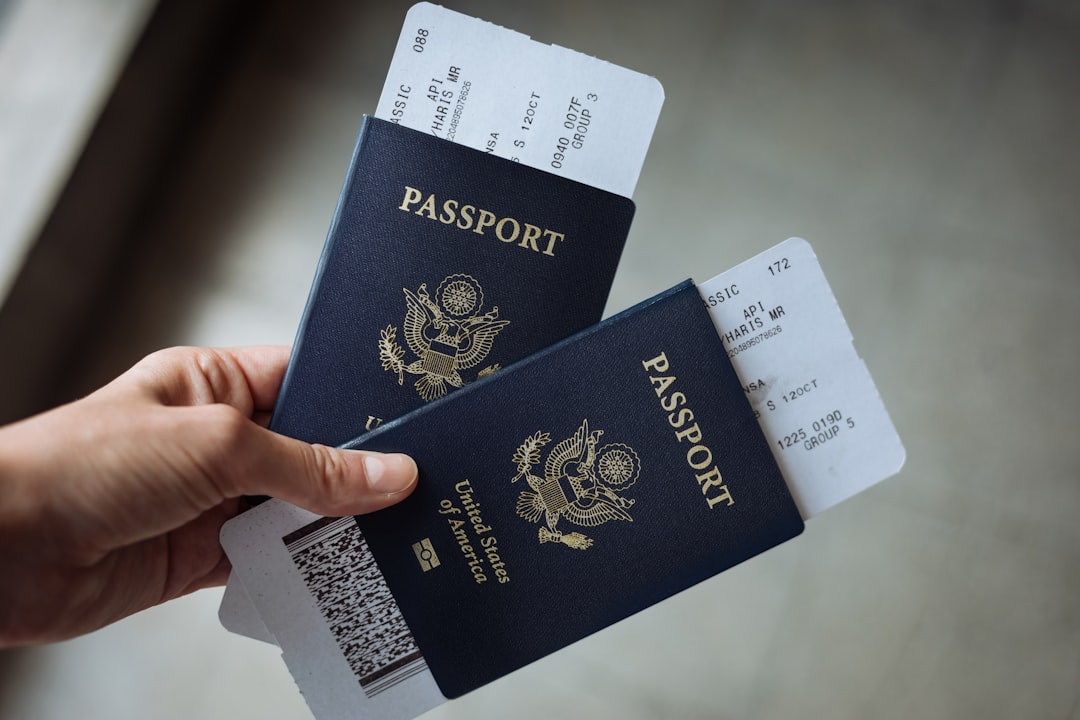
First find out which group you belong to
Let us start with the most important point. Whether you can set up a trade licence in Czechia as a foreigner in an afternoon, or face several months of dealings with a consulate, depends on one question: where you come from.
Foreigners law and the Trade Licensing Act divide foreigners into two basic camps. The process, documents and costs differ substantially.
| Category | Who belongs here | Residence for business | Position under the Trade Licensing Act |
|---|---|---|---|
| EU / EEA / Swiss citizens | All EU states, plus Iceland, Liechtenstein, Norway (EEA) and Switzerland | No permit needed | Same as Czech citizens (Section 70 of the Act) |
| Third-country nationals | Everything else (Vietnam, USA, India, Serbia, Ukraine outside temporary protection...) | Residence authorisation required | May do business only after meeting special conditions |
There is also one more group with its own rules: Ukrainians with temporary protection. For business purposes they are treated as equal to EU citizens, even though Ukraine itself is not in the EU. We cover them in a separate chapter.
Find your category and continue with the relevant part. Tax residence and obtaining IČO are dealt with together at the end, because they apply to everyone in the same way.
EU, EEA and Swiss citizens: almost like a Czech
If you are a citizen of an EU state, Iceland, Liechtenstein, Norway or Switzerland, there is good news. Setting up a trade licence is practically the same as for any Czech citizen. You do not need any special residence permit for business; your right to free movement and establishment follows directly from EU law.
What you will need:
- Trade notification at any municipal Trade Licensing Office (the "single administrative point" principle applies, so you do not have to go to the office according to your residence). It can also be done electronically through the Trade Business Portal (rzp.gov.cz) or at a Czech POINT branch.
- Valid identity document - identity card or passport.
- Proof of good standing. For an EU citizen, the office requests the Czech Criminal Register extract itself. You document a foreign extract only for a craft, regulated or concession trade if you previously stayed in another state.
- Professional competence, but only for craft, regulated or concession trades (education, practice). If you do not meet it, you appoint a responsible representative. For an unrestricted trade, you do not deal with this.
- Document proving the registered seat (sídlo) of business - owner's consent or lease agreement.
The administrative fee for the first trade notification is 1,000 Kč (Act No. 634/2004 Coll., item 24, verified 2026). If you file electronically, you save 20 % and pay 800 Kč. Each further notification later costs 500 Kč.
After the notification, the office enters you in the Trade Register and assigns IČO within five working days. From then on the same rules apply as to domestic self-employed people: registration with ČSSZ and your health insurance company, advance payments, taxes.
Third countries: residence and trade must be solved together
This is where it gets more complicated, so read carefully. A foreigner from a third country needs two things at once:
- a residence authorisation that allows business, and
- trade authorisation (živnostenské oprávnění).
One without the other is not enough for doing business. The order in which you handle them also has its rules, which we will come to.
Which residence authorisation is relevant
| Authorisation | For whom | Validity | Where filed | Fee |
|---|---|---|---|---|
| Long-term visa for the purpose of business (over 90 days) | First arrival in Czechia for business | max. 1 year | Czech consulate abroad | according to the consulate tariff |
| Long-term residence permit for the purpose of business | Follows a visa; stay over 1 year | max. 2 years, extendable | Ministry of the Interior (after entry to Czechia) | 2,500 Kč |
| Permanent residence | Usually after 5 years of continuous stay | permanent | Ministry of the Interior | according to law |
The typical route is through a long-term visa for the purpose of business. It is filed in person at a Czech consulate abroad (you will provide biometrics and a form, and in the purpose field you state "Business"). Application documents must not be older than 180 days.
Allow time. The decision period for a long-term visa is usually 90 days, in more complex cases up to 120 days (verified 2026, Ministry of Foreign Affairs of the Czech Republic). This is not a matter of a few days; plan several months ahead.
An application to extend or change to long-term residence is handled by the Ministry of the Interior (60-day period). It is filed no later than the last day of validity of the current authorisation, and no earlier than 120 days before expiry. Watch the date carefully.
Funds for residence: beware of confusing terms
This is a trap many people fall into. For calculating funds for a visa, the existence minimum, which for 2026 is 3,130 Kč, is used; this is not the same as the living minimum.
| Purpose of stay | Required funds | Calculation |
|---|---|---|
| Visa for the purpose of business | 156,500 Kč | 50× existence minimum (50 × 3,130) |
| Long-term residence for the purpose of business | proof of monthly income | sum of the living minimums of assessed persons + housing costs |
For long-term residence for business, you do not prove a one-off amount but the entrepreneur's aggregate monthly income, meaning a tax return and proof of paid social and health insurance for the last tax period. The income must cover the living minimums of all jointly assessed persons plus housing costs.
Note: the living minimum for an individual is 5,500 Kč per month from 1 May 2026 (until 30 April 2026 it was 4,860 Kč). The increase was therefore not postponed to 1 July 2026; it took effect already on 1 May 2026. Normative housing costs in their previous form were meanwhile abolished in connection with the move to the so-called super benefit. Therefore always verify the concrete calculation of funds directly with the Ministry of the Interior or on the Information Portal for Foreigners (ipc.gov.cz); amounts can change during the year.
Trade licence for a third-country national step by step
Now the practical part. Say you are a third-country national and want to sell goods through an e-shop or open small business premises (provozovna). What should you do?
Important news at the start: you can notify the trade before you actually obtain residence. But the authorisation arises only when you submit the residence document to the office.
- Trade notification at a municipal Trade Licensing Office, on the Single Registration Form (JRF).
- Payment of the administrative fee of 1,000 Kč (800 Kč electronically).
- Documenting the registered seat of business - owner's consent or lease agreement.
- Proof of good standing - an extract from criminal records from the country of origin (or an equivalent document, or an affidavit if the state does not issue an extract), not older than three months (Section 46(1)(b) of Act No. 455/1991 Coll.). A foreign document must also have an official Czech translation and verification of the authenticity of the signature and stamp (Section 5(3) of the Trade Licensing Act). In practice this is done by apostille or superlegalisation under the relevant international treaty (the Act itself does not use these terms). Arrange this in advance; it is often the slowest part.
- Professional competence or responsible representative for craft, regulated and concession trades.
- Submission of the residence document - visa or long-term residence permit.
Key deadline: 3 working days
Frame this. For a foreign natural person who must document residence, trade authorisation arises on the day they submit the residence-permit document to the Trade Licensing Office, but only if they submit it within 3 working days from the day on which they notified their place of residence in the Czech Republic (Section 47(8) of the Trade Licensing Act).
If you do not submit it within this period, you have not met the conditions for the authorisation to arise and the whole process becomes complicated. Do not underestimate it.
Responsible representative: legal, but not for show
If you do not meet professional competence, typically for a craft trade, or do not communicate fluently in Czech, you can appoint a responsible representative (odpovědný zástupce), a person with the required qualification who is responsible for proper operation of the trade. This institute is widely used in practice, for example by the Vietnamese community for hospitality services or cosmetic services.
Warning: the responsible representative must genuinely manage the activity. A purely formal "lending" of a trade licence, where the representative knows nothing about the operation and only lends their name, breaches the Trade Licensing Act and can cost you dearly.
Ukrainians with temporary protection: a special and more favourable regime
Temporary protection is the most common residence status of Ukrainians after 2022 and has very accommodating rules for business.
What is much simpler for you:
- A Ukrainian citizen with temporary protection is treated as equal to an EU citizen for business purposes (Lex Ukraine, in conjunction with Section 70 of the Trade Licensing Act).
- You do not have to document a Ukrainian criminal-record extract; the Czech Criminal Register is enough. Compared with other third countries, this removes apostille, superlegalisation and translation. A major time saving.
- You do not have to document funds for residence under the foreigners law for the trade authorisation to arise.
The trade-notification process is then basically the same as for an EU citizen: form, 1,000 Kč fee, registered seat, and possibly a responsible representative for qualified trades.
The catch people forget
Here is the most important point many people miss. The validity of your trade authorisation is tied to the validity of temporary protection. If you do not extend temporary protection, your trade authorisation also expires. They are not two independent things; they hang together.
Under Council Decision (EU) 2026/1912 of 30 July 2026, temporary protection at EU level as a whole is possible until 4 March 2028. That is the Europe-wide framework, not the individual validity of your document. The current extension round in Czechia (through Lex Ukraine) moves individual validity only to 31 March 2027; another round towards 2028 is still expected and its timetable has not yet been published. The 2026 extension has two phases:
- Online registration through the Information Portal for Foreigners (IPC), to be completed by 15 March 2026, extending protection to 30 September 2026. You use your existing account.
- Personal visit and placement of the new visa sticker no later than 30 September 2026, which extends protection to 31 March 2027.
Practical advice: Watch the deadlines for extension of temporary protection and validity of the trade licence as one whole. Missing 15 March 2026 may lead to the expiry of both protection and trade authorisation at the same time. It is also advisable to notify the Trade Licensing Office that you want to continue doing business; the office verifies data in the Foreigners Information System, or you document confirmation of registration. Validity until 31 March 2027 is not final; expect another extension round towards the European framework until 2028. (Verify dates at ipc.gov.cz, because the timetable may be specified further.)
IČO, documents and tax residence: common for everyone
Summary of documents by category
| Document | EU/EEA/CH citizen | Third country | Ukrainian with temporary protection |
|---|---|---|---|
| Passport / identity document | yes | yes | yes |
| Residence document (visa/residence) | no | yes (within 3 working days) | temporary protection |
| Criminal-record extract from country of origin | only for qualified trades | yes (apostille + translation) | no (Czech extract enough) |
| Proof of registered seat | yes | yes | yes |
| Professional competence / responsible representative | according to trade type | according to trade type | according to trade type |
| Administrative fee | 1,000 Kč | 1,000 Kč | 1,000 Kč |
IČO for foreigners
No surprise: IČO (business identification number) is assigned by the Trade Licensing Office automatically on entry in the Trade Register, usually within 5 working days. It applies to foreigners exactly the same as to Czechs. You do not apply separately for anything.
Through the Single Registration Form (JRF), when notifying the trade you also notify commencement of independent gainful activity to ČSSZ (social insurance) and your health insurance company. Do not underestimate these notifications; after starting the activity you have only 8 days.
A small but important note: an ordinary self-employed person no longer registers separately for income tax. This registration duty for natural persons was abolished as of 1 January 2024. You then deal with income tax in the standard annual tax return. (Older guides online still mention registration through JRF; that no longer applies.)
Tax residence: which income you will tax
This decides whether you tax only Czech income in the Czech Republic or worldwide income. You are a tax resident of the Czech Republic if you meet at least one condition (Section 2 of Act No. 586/1992 Coll., on Income Taxes):
- you have a home in the Czech Republic, meaning a permanent flat with an intention to stay there permanently, or
- you usually stay here, meaning you are in the Czech Republic for at least 183 days in a calendar year (continuously or with interruptions).
The difference is fundamental: a resident taxes worldwide income in Czechia, while a non-resident taxes only income from sources in the Czech Republic. If you were resident in two states at the same time, the double-tax treaty decides; it assesses the centre of vital interests, permanent home, habitual abode and citizenship in that order. The Tax Administration has issued special guidance for Ukrainians during the war on determining residence; if this concerns you, see financnisprava.gov.cz.
The most common mistakes to avoid
- Failure to submit the residence document within 3 working days after notifying the place of residence means the trade authorisation does not arise at all.
- Confusing the living minimum and the existence minimum when calculating funds for residence. For a business visa, 50× the existence minimum (3,130 Kč) = 156,500 Kč is used.
- Foreign criminal-record extract without apostille, superlegalisation and translation; the office will not accept it.
- Ukrainians: missing the temporary-protection extension (by 15 March 2026) means expiry of both protection and trade licence.
- Forgotten registration with ČSSZ and the health insurance company within 8 days after starting the activity, and non-payment of advances.
Where to turn
| Institution | What it handles | Website |
|---|---|---|
| Ministry of the Interior of the Czech Republic | Residence of foreigners, temporary protection | mv.gov.cz |
| Information Portal for Foreigners (IPC) | Applications, extension of temporary protection | ipc.gov.cz |
| Ministry of Industry and Trade (MPO) | Trade business, register | mpo.gov.cz, rzp.gov.cz |
| Ministry of Foreign Affairs of the Czech Republic | Visas, embassies | mzv.gov.cz |
| Tax Administration | Taxes, tax residence | financnisprava.gov.cz |
| ČSSZ | Social insurance of self-employed people | cssz.cz |
This page is for information only and does not replace individual advice. Foreigners law is complex and every case is different. For a specific procedure, always verify the current position on the websites of the Ministry of the Interior, IPC and MPO, or contact a specialist.
This guide is also available in Czech and Ukrainian — use the language switcher in the site header.
Frequently asked questions
Sources and links
- Ministerstvo vnitra ČR – Občané třetích zemí, dlouhodobý pobyt
- IPC – Prodloužení dočasné ochrany do roku 2028 a úprava podmínek pro její udělení
- Informační portál pro cizince (IPC) – Prodlužování dočasné ochrany v roce 2026
- MZV ČR – Podnikání (pobytová oprávnění nad 90 dnů)
- Zákon č. 455/1991 Sb., o živnostenském podnikání (§ 5, § 46, § 47, § 70)

Business for Ukrainians with temporary protection
Do you have temporary protection and want to do business in Czechia? When setting up a trade licence, you have...

Craft Trades and Professional Qualification under Sections 21 and 22
What evidence of professional qualification the Trade Licensing Act requires for craft trades and how to prove...

The Trade Register under Section 60 of the Trade Licensing Act
What the Trade Register contains, how its public and non-public parts differ, what extracts you can obtain fro...