EET 2.0 from 1 January 2027: who it affects and how to prepare
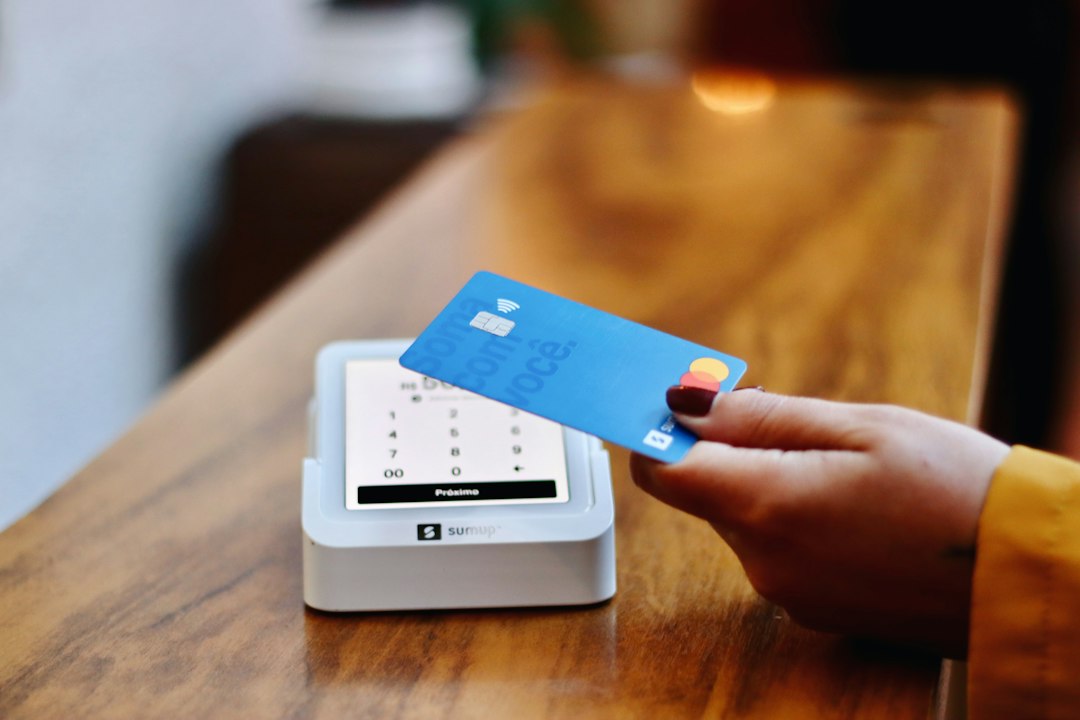
From 1 January 2027, hairdressers, stallholders at Christmas markets and taxi drivers will once again send data on their sales to the Financial Administration. It applies to cash and to payments by card or mobile phone. The new recording, called EET 2.0, is simpler than the one that ran from 2016 to 2022. But it also affects people who have not thought about it yet, because they hardly ever take cash and assume the recording does not concern them.
Below you will find how to tell whether the recording applies to you, when it is worth buying peace of mind from it with the EET OFF regime, how to prepare and what happens if you miss something.
EET 2.0 at a glance
| Topic | In brief |
|---|---|
| From when | 1 January 2027; according to the Financial Administration, January is a pilot month and obligations will not be enforced during it |
| Act | No. 180/2026 Coll., on the Recording of Sales |
| Who it affects | businesses whose customers pay in person: by cash, card, QR code at the till, mobile phone |
| What is not recorded | distance payments (bank transfer, online shop payment gateway) and cash on delivery collected by a postal service |
| What you will need | the Daňová informační schránka plus (DIS+, the “tax information mailbox plus”) in the MOJE daně tax portal, a recording unit, a till certificate and a till or an application |
| What it costs | the certificate and the MOJE eet application are free; in the first year, a tax credit of up to 5,000 Kč |
| Exemption for the smallest | EET OFF: flat-rate taxpayers in band 1 with income up to 1,000,000 Kč, for a surcharge of 1,400 Kč per month |
| Receipt | the Act on the Recording of Sales does not require you to issue one |
How we got here
Electronic recording of sales has existed once before. It applied from 1 December 2016 under Act No. 112/2016 Coll., the state suspended it in spring 2020 because of covid, and Act No. 458/2022 Coll. repealed it from 1 January 2023. We summarised it at the time in our overview of taxes for the self-employed.
The new Act is dated 9 September 2026. The President signed it on 17 September and it was published in the Collection of Laws on 7 October as Act No. 180/2026 Coll. Compared with the old EET, there is less paperwork: you do not have to print a receipt, in most cases a device you already own will do, and the smallest businesses get a till application from the state free of charge. Card payments were recorded under the original EET too, and from January they will be recorded again.
Does it apply to me? What matters is where the customer pays
Do not ask whether you take cash. Ask whether the customer pays you in person. You record payments that you receive from the customer in person, and payments at your business premises or in your means of transport (§ 6 of the Act). It makes no difference whether it is by cash, card, QR code at the till or mobile phone. Cash you always record.
You do not record distance payments. The customer sends you money by transfer from home, pays by card through an online shop's payment gateway, or pays with a QR code from an invoice in their online banking. The recording also does not cover cash on delivery that the post office collects and sends to your account as a postal service.
A few situations from practice:
- A hairdresser in a salon, the customer pays by card on the terminal: you record. You will find more about the field in our guide to hairdressing and beauty.
- A house painter sends an invoice after the job and the customer pays by transfer: you do not record. But if the painter regularly counts on cash from customers and a customer pays them in hand, the painter does record.
- An online shop with online card payment does not record. When a customer collects the goods at your shop and pays on the spot, that is a payment at your business premises, so it is recorded. We describe how online shops handle payments under payment gateways.
- A taxi driver whose customer pays in the car by cash or card: records (see the guide for taxi and platform drivers).
- A market stallholder records every payment at the stall (guide to market stall trading).
The Act also takes isolated payments into account. If a customer exceptionally and unexpectedly pays you in cash, even though that is not usual in your business, you do not have to record it. But if you expect personal payments, you record them even if there are few. What matters is how you do business, not how many such payments you receive.
Who does not have to record
The Act does not exempt whole industries. What matters is what payment you receive and who you are, not what you do for a living. The main exemptions are:
- flat-rate taxpayers signed up to the EET OFF regime (see below),
- blind businesspeople who meet the conditions of § 11 of the Act,
- the state, municipalities, regions, banks, insurance companies and other financial institutions,
- certain types of sales, for example from vending machines outside business premises, from public toilets, public transport, postal services, gambling, energy or water supply.
Christmas carp are exempt too: the sale of freshwater fish from 18 to 24 December is not recorded, provided that you sell only fish at the premises during that time. The Financial Administration has the full list of exemptions on its page What is exempt from the recording of sales.
EET OFF: buying peace of mind from the recording
The EET OFF regime is exclusively for natural persons in band 1 of the flat-rate regime (paušální režim) whose income from self-employment for the previous year did not exceed 1,000,000 Kč. Whoever signs up does not record and instead pays a surcharge of 1,400 Kč per month on top of the flat-rate tax, that is 16,800 Kč per year.
The deadline is strict. The notification is filed by the 10th day of the tax period from which you are signing up, so for 2027 by 11 January 2027 (10 January is a Sunday). A late notification is ineffective and a missed deadline cannot be waived. You can also sign up in the notification of entry into the flat-rate regime. If you start doing business during the year, you can sign up then too and you pay the surcharge from the month you start; the deadline for this case is described by the Financial Administration on its page about signing up for EET OFF.
You cannot change the regime during the year. You can sign out again by the 10th day of the following year. If your income exceeds 1,000,000 Kč during the year, you pay the surcharge until the end of the year and start recording from the next year. If you remain in band 1, notify the Financial Administration within 15 days that your sign-up has ended. Whether the surcharge pays off for you is analysed in the article EET OFF: is the 1,400 Kč monthly surcharge worth it?
It depends on what the recording would cost you. If a mobile phone and the free MOJE eet application are enough for you, you would pay 16,800 Kč a year just to avoid dealing with the recording. If you would have to buy a terminal and till software because of the recording, work out EET OFF for yourself. Do not include the 5,000 Kč tax credit in the calculation: it is claimed in the tax return, which flat-rate taxpayers do not file.
How to prepare in five steps
You have been able to sign up for recording since the beginning of November 2026. The Financial Administration describes it in five steps:
- Sign in to DIS+. In the MOJE daně portal (the tax portal), click the Online finanční úřad tile. You sign in with a bank identity, the eObčanka (electronic ID card), data-box credentials or credentials from the Financial Administration. If you do not have DIS+ yet, you activate it there too; activation takes 48 hours at most, and up to five working days for people with no record at the tax office.
- Activate EET. In DIS+, just click the “AKTIVOVAT EET” (activate EET) button.
- Set up a recording unit. This is the place where you sell: a brick-and-mortar business premises, a stall or mobile shop, a vending machine, a website or application, a car. If you travel to customers and have no business premises, you register yourself.
- Generate a till certificate. It is free and it signs the sales data so that the system can tell the data is from you and that nobody has changed it on the way. Store the certificate safely.
- Prepare a till or an application. A tablet, computer or mobile phone with till software will do, or a till system connected to the internet. Upload the certificate into it, or ask your supplier to do so.
For the smallest businesses, the Financial Administration is launching the free web application MOJE eet on 1 December 2026. It obtains the certificate itself and can handle at most two recording units and four authorised employees. According to the Financial Administration, it is not suitable for VAT payers. If you already have a till system, ask your supplier about an update. You will find an overview of programs in the comparison of invoicing applications.
How it works at the till
You send the sales data at the latest at the moment you receive the payment (§ 16). The system returns a confirmation code to you; you do not have to print it on the receipt. If the internet goes down, send the data as soon as you can, at the latest within 48 hours of receiving the payment (§ 20).
The Act on the Recording of Sales does not require a receipt. Another regulation may still require a document, for example a tax document for a VAT payer.
What it costs and what the state gives back
The till certificate and the MOJE eet application are free, and according to the Financial Administration, in most cases you will not need to buy a new device.
Whoever records can claim a tax credit for the recording of sales of up to 5,000 Kč in the first year in which they record a sale (§ 35be of the Income Tax Act). It is not a contribution towards a till; you are entitled to it even without buying anything. The credit is one-off and limited: it cannot be higher than the positive difference between 15 % of the partial tax base from self-employment and the basic taxpayer credit. With a low profit it may therefore be smaller or zero. Those who already recorded under the old EET are entitled too; sales from 2016 to 2022 do not count.
What you risk if you miss it
According to the Financial Administration, January 2027 is a pilot month: sales are to be recorded as normal, but compliance will not be enforced. The Act says nothing of the kind. It is an announced approach of the authorities and applies only to January.
For failing to send sales data, you risk a fine of up to 500,000 Kč (§ 24); the same upper limit applies to seriously obstructing or frustrating the recording (§ 23). Both the tax and the customs offices will carry out inspections.
Where people most often go wrong
- “I only take cards, so it does not apply to me.” It does apply to you. A card payment on a terminal at your premises is an in-person payment.
- “I have an online shop, so I have to record everything.” You do not record payments through the gateway; you do record payments on personal collection at the shop.
- “I will sign up for EET OFF in February.” Too late. For 2027 the last day is 11 January and a late notification is not valid.
- “I have to buy a new till.” Mostly not; a mobile phone or tablet with an application is enough.
What to do now
This year, check in the MOJE daně portal that you have an active DIS+ and go through the five steps above. Flat-rate taxpayers in band 1 decide by 11 January 2027 whether they want EET OFF. Advice is available from the Financial Administration helpline 953 109 109 (Monday to Thursday 9–17, Friday 9–14) and on the website eet.gov.cz.
Frequently asked questions
Sources and links
- Act No. 180/2026 Coll., on the Recording of Sales and on amendments to certain other acts
- Financial Administration – Who must record sales
- Financial Administration – What is exempt from the recording of sales
- Financial Administration – How and when to sign up for the EET OFF regime
- Financial Administration – How to start recording
- Financial Administration – MOJE eet web application
- Financial Administration – EET 2.0: businesses can now sign up for recording (2 November 2026)
- Act No. 458/2022 Coll., repealing Act No. 112/2016 Coll., on the Recording of Sales

What changes for the self-employed from 1 January 2027: an overview with links to the details
EET 2.0, advance payments, flat-rate tax, childcare credit, VAT and the minimum wage. This signpost shows what...
The childcare credit and the student credit return from 2027
Act No. 180/2026 Coll. reinstates the childcare credit and the student credit and raises the tax return thresh...

Flat-rate tax 2027: 9,661 Kč in band 1 and the 11 January deadline
Apply for flat-rate tax for 2027 by 11 January 2027. An overview of the three bands with the split into tax, s...