EET OFF: is the 1,400 Kč monthly surcharge worth it, or should you record?

A hairdresser on flat-rate tax takes both cash and cards from her customers. From January 2027 she has to record this. Or she can spare herself the recording for 1,400 Kč a month, that is 16,800 Kč a year. She pays it even when the salon is closed. Is it worth it for her?
The answer depends on how your customers pay you and on what you would have to buy. Not everyone who is offered the surcharge needs it.
First find out whether EET applies to you at all
What is recorded are payments that you receive from a customer in person or at your business premises or in your vehicle. Distance payments are not recorded: a transfer from an account, a payment through an online shop's payment gateway. If you do not accept in-person payments in your business, you do not have to record, and the surcharge would be a purely unnecessary expense. The guide to EET 2.0 from 1 January 2027 explains this in detail, including the exceptions from recording. We do not repeat it here.
If after reading the guide you say “I do have to record”, read on.
Who may choose EET OFF
There are two conditions. You must be a natural person in band 1 of the flat-rate regime and your income from independent activity for the previous year must not exceed 1,000,000 Kč. We found no other conditions, for example a limit on the number of employees, on the Financial Administration's pages.
You file the notification by the 10th day of the tax period from which you are signing up. For 2027 that is 11 January 2027, because 10 January is a Sunday. A late notification is ineffective. When you enter the flat-rate regime or change band, you can sign up directly in the notification of entry or change. No form is prescribed for a separate notification.
The regime cannot be changed during the year. You can withdraw by a notification filed by the 10th day of the following year. If your income exceeds 1,000,000 Kč during the year, you pay the surcharge until the end of the year and start recording from the next one. If you stay in band 1 in the meantime, the Financial Administration asks for a notification ending the sign-up within 15 days of the day the income exceeded the limit. The surcharge also ends when you leave band 1.
What the surcharge costs and what recording costs
The surcharge is 1,400 Kč for every calendar month of sign-up, 16,800 Kč a year. It is paid together with the flat-rate advance payment: the Financial Administration speaks of increasing the flat-rate advance payments by the surcharge. For 2027, band 1 comes to 9,661 Kč per month according to our calculation from the Act; the Financial Administration has not yet published the table. With the surcharge it would be 11,061 Kč. The final amount will be confirmed only by the table.
Recording is on the other side. The till certificate is free. From 1 December 2026, the Financial Administration is also launching the free MOJE eet web application, intended for the smallest businesses. According to the Financial Administration, in most cases there will be no need to buy a new device. So you pay mainly with your time and attention at every payment. But if the application were not enough for you and you had to buy a terminal or till software, work out specific offers; nobody can give you a general figure.
A one-off tax credit of up to 5,000 Kč goes to whoever starts recording. In EET OFF you do not record sales, so do not count on this credit for the surcharge option. The conditions of the credit are in the EET 2.0 guide.
Four situations
A stallholder with dozens of payments a day. The payments repeat and are made at the stall, so recording becomes routine. If you can handle it from a mobile phone or tablet, the surcharge is unnecessary. Especially for seasonal selling: it would be paid even in the months when the stall is closed. More about the field in the guide to market stall trading.
A hairdresser with a salon. She must record every payment at the premises. If you do not want to add anything at the chair or the equipment does not suit you, EET OFF is a legitimate choice. But work out whether that peace of mind is worth 16,800 Kč a year to you. If not, recording comes out cheaper. The field is described in the guide to hairdressing and beauty.
An IT freelancer with payments by transfer. He does not record. His customers pay at a distance, so the recording does not concern him and the surcharge would be an expense for nothing. Do not sign up.
A tradesperson who occasionally takes cash on site. What decides is how you do business, not how many such payments you receive. If you routinely count on cash from customers, you record. If a customer exceptionally and unexpectedly pays in hand, you do not have to record. Consider whether to have customers always pay by invoice: if the customer pays it by transfer from their own online banking, the recording does not apply to the payment and you do not have to pay the surcharge.
Three questions before deciding
Go through them calmly, before the end of the year. Do you accept payments in person at all, or do customers send money to your account? Do you have a mobile phone, tablet or computer that will serve at the payment, and are you willing to work with it at every sale? And how stable are your sales: paying a fixed 1,400 Kč is easier to bear with good and even income, harder with seasonal and fluctuating income.
If you answer “no” to the first question, that is it, do not sign up. If you answer “yes” to the second, the surcharge usually has nothing to offer. Only with a “no” to the second and a “yes” to the first does it make sense to think seriously about EET OFF.
Where the decision bites
You pay the surcharge for twelve months even if you sell nothing, and the decision applies for the whole year. Someone who signs up out of caution can fix it only in January of the following year. The opposite mistake, however, is more expensive: for failing to send data on a sale, a fine of up to 500,000 Kč is possible, even though January 2027 is supposed to be a pilot month according to the Financial Administration. Decide according to how people pay you.
Deadline and where to sign up
You file the notification by 11 January 2027 if you want EET OFF. A later notification is not valid and the deadline cannot be waived. You will find the procedure and conditions on the Financial Administration's page How and when to sign up for the EET OFF regime. If you would rather sign up for recording instead, you will find the procedure in DIS+ in the article EET 2.0: signing up in DIS+. We summarise the amount of advance payments for 2027 in the article on flat-rate tax 2027.
Frequently asked questions
Sources and links
- Financial Administration – EET OFF
- Financial Administration – How and when to sign up for the EET OFF regime
- Financial Administration – Who must record sales
- Financial Administration – MOJE eet web application
- Act No. 180/2026 Coll., on the Recording of Sales and on the amendment of certain other acts
- Financial Administration – Flat-rate tax, general information
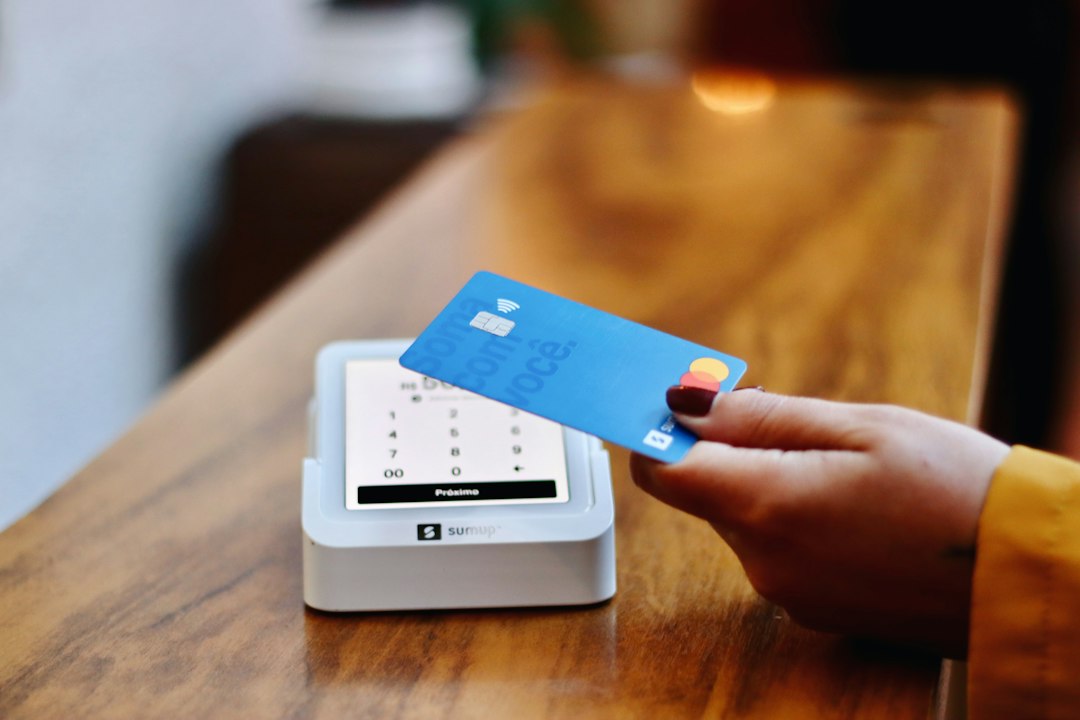
EET 2.0 from 1 January 2027: who it affects and how to prepare
From January, sales are recorded again. We explain in plain language who must record cash and card payments, w...

What changes for the self-employed from 1 January 2027: an overview with links to the details
EET 2.0, advance payments, flat-rate tax, childcare credit, VAT and the minimum wage. This signpost shows what...
The childcare credit and the student credit return from 2027
Act No. 180/2026 Coll. reinstates the childcare credit and the student credit and raises the tax return thresh...